Verification purchase - what is it and why should you know about it?
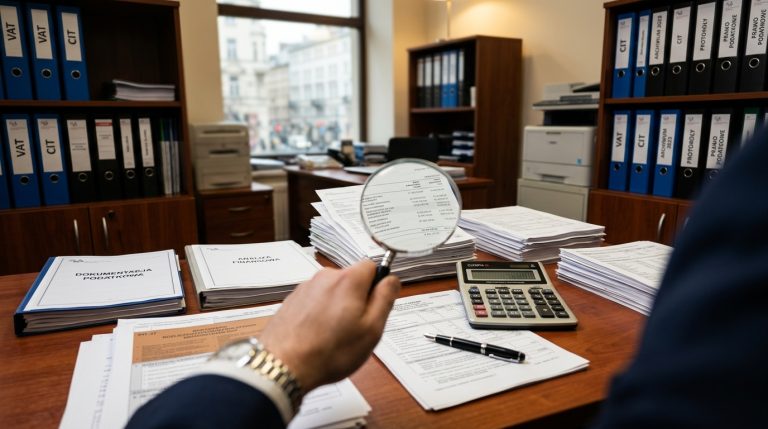
If you run a business that sells goods or services to consumers, you need to be prepared for the fact that at any moment a tax officer posing as an ordinary customer may walk into your premises. A verification purchase is a form of inspection introduced into the National Revenue Administration Act from 1 January 2022. It involves the purchase of goods or a service by an authorised employee of a tax authority in order to verify whether the business correctly records sales on a cash register.
The latest data from the West Pomeranian Voivodeship for the first half of 2026 is alarming. The Revenue Administration Chamber in Szczecin carried out 1,054 verification purchases, and in as many as 60% of cases irregularities were found. This means that more than every second business inspected breached the fiscal rules. The scale of the problem is growing - across the whole of 2025 the share of irregularities was 45%, which means a clear increase this year.
It is worth stressing that verification purchases are carried out only by authorised employees and officers of tax offices (urzędy skarbowe) and customs and tax offices. The inspection takes place without prior warning, and the officer reveals their identity only after the transaction has been completed.
What penalties apply for failing to issue a fiscal receipt?
The financial consequences of failing to issue a receipt can be severe. Under Article 62 § 4 of the Fiscal Penal Code, a person who, contrary to the provisions of the act, makes a sale without using a cash register or fails to issue a document confirming the sale is liable to a penalty. In practice, this means that a fine may be imposed both for bypassing the cash register entirely and for simply not giving the customer a receipt.
The amount of the fine for a fiscal offence (wykroczenie skarbowe) in 2026 is as follows:
- Minimum fine - PLN 480.60
- Maximum fine - PLN 24,030 (twenty times the minimum monthly wage)
- For fiscal crimes (e.g. systematically avoiding recording sales) - significantly higher penalties, including the possibility of a custodial sentence
A well-publicised case from Szczecin illustrates the inspection mechanism perfectly. A tax office employee bought a bottle of water for PLN 5.50 in a pierogi restaurant and did not receive a receipt. The fine? PLN 500. A co-owner of the premises explained that the inspection took place before official opening and the cash register was only just being started up. Arguments of this kind - although understandable from a human point of view - do not amount to an effective legal defence if the premises were in fact trading.
High-profile verification purchase cases - lessons for business owners
Pierogi restaurant in Szczecin - water for PLN 5.50
The case, which came to public attention in early July 2026, caused a storm on social media. Internet users wrote about "provocation" and "hunting" small business owners. The spokesperson of the Revenue Administration Chamber in Szczecin, Dr Sebastian Osiński, declined to comment on the specific case, citing tax secrecy under the Tax Ordinance. He stressed, however, that the obligation to record sales on a cash register is absolute - regardless of the value of the transaction or the time of day.
Pizzeria in the Tri-City - incorrect VAT rate
At the end of May 2026, a restaurateur from the Tri-City received a fine of PLN 2,500 after a verification purchase of a prawn pizza. The problem was not a missing receipt but the application of the wrong VAT rate. The receipt showed 8% tax, whereas seafood is subject to the 23% rate. This case shows that verification purchases serve not only to check that a receipt was issued, but also to check that tax is calculated correctly.
Both cases teach one thing - the tax authorities are analysing every aspect of a transaction more and more closely. A business owner must ensure not only that a receipt is issued, but also that the data on it is correct, including the proper tax classification of the goods and services sold.
How can you effectively protect yourself from the consequences of a verification purchase?
The best defence against a fine is prevention. Here are the key steps that every business required to keep records on a cash register should take:
- Regular staff training - every employee who operates the till must know the procedure for recording sales and issuing receipts
- Checking VAT rates - make sure your cash register has the correct tax rates programmed for all the products and services you offer
- Inspection procedure - draw up internal rules for what to do if an officer of the National Revenue Administration (KAS) reveals themselves
- Cash register servicing - keep up with technical inspections of the device to avoid a situation in which the register is not working at the time of an inspection
- Legal advice - if you receive a fine, you do not have to accept it - you have the right to refuse and to defend your position in court
It is worth remembering that refusing to accept a fine is the right of every business owner. In that case the matter goes to court, where the person inspected can present their arguments and evidence. Professional legal assistance at this stage significantly increases the chances of a favourable outcome - especially where the circumstances of the inspection raise doubts about its correctness.
The scale of inspections is growing - what does it mean for your business?
Data from the West Pomeranian Voivodeship shows a clear trend. In some tax offices the success rate of inspections reaches 100% - as was the case with the tax office in Myślibórz (15 inspections, 15 breaches) and the tax office in Pyrzyce (8 inspections, 8 breaches). Other offices, such as the one in Białogard, found irregularities in 85% of cases (17 out of 20 inspections).
Although 1,054 inspections over half a year may seem a small number compared with the tens of thousands of retail and service outlets in the region, it should be remembered that the National Revenue Administration is systematically expanding its inspection tools. The rise in the share of irregularities detected from 45% in 2025 to almost 60% in the first half of 2026 may indicate increasingly better targeting of businesses for inspection.
For business owners this means one thing - the risk of inspection is real, and its consequences can be costly. It is not only about the fine itself, but also about potential further tax proceedings if the irregularities turn out to be systemic.
Received a fine after a verification purchase? Contact our firm
The verification purchase is a tool that KAS is using more and more often and more and more effectively. If you have received a fine for not issuing a receipt or for an incorrect VAT rate, you do not have to accept it without a fight. Each case requires individual analysis - from the circumstances of the inspection, through the correctness of the procedure, to the justification for the penalty imposed.
Our firm specialises in tax law and fiscal criminal proceedings. We help business owners both with prevention - preparing internal procedures that minimise the risk of inspection - and with defence against unjustly imposed penalties. Contact us to discuss your situation and learn about the legal options available. An initial consultation will help assess whether it is worth challenging the fine imposed and what steps to take next.
Have a question about this?
The first consultation is free - let us talk about your situation.