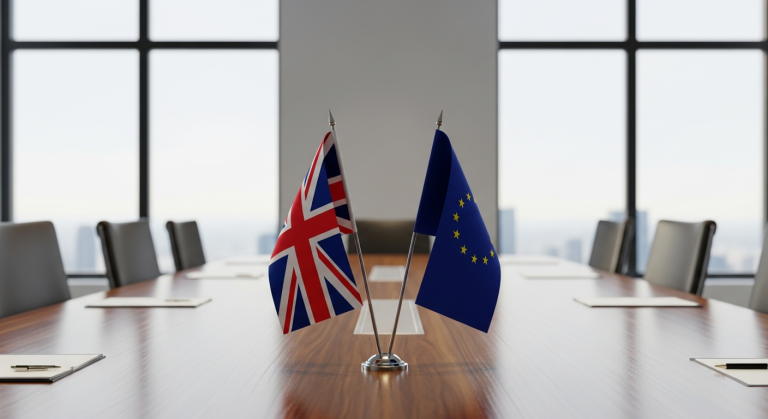
A fresh start in the UK's relations with the European Union
The government of Prime Minister Andy Burnham has announced a decisive acceleration in rebuilding relations with the European Union. The Minister for EU Relations, Hamish Falconer, stated at the party conference in Liverpool that the UK intends to "go further and faster" in moving closer to its European partners. This is a signal of significance that is not only political, but above all legal and economic - for British and European business owners alike.
Falconer stressed that Brexit has not been a success, and that the Prime Minister has set him an ambitious task: to negotiate a package of agreements that will bring the UK closer to Europe in key areas. At the same time, he noted that the so-called Brexit red lines - concerning the single market, the customs union and free movement of people - remain intact. This means that any agreements will be sectoral rather than systemic in nature.
For Polish business owners and law firms serving clients with British connections, this change of course means a need to follow developments closely. Any new sectoral agreement may change the legal framework for doing business between the UK and the EU.
Key areas of negotiation and their legal implications
Minister Falconer identified specific areas in which negotiations are under way or are about to begin. Their scope is broad and covers issues with a direct impact on the legal environment for business. It is worth examining them from the perspective of commercial and regulatory law.
The most important areas of negotiation include:
- Agri-food agreement - potential simplification of sanitary and phytosanitary (SPS) procedures, which could significantly reduce the cost of exporting food between the EU and the UK
- Emissions trading - linking the UK ETS with the EU system, which will affect businesses' obligations regarding emissions reporting and the purchase of allowances
- Youth visas - mobility facilitations that may also apply to young Poles planning to stay in the UK
- Cooperation in defence and technology - opening up new opportunities for companies in the defence and hi-tech sectors
- The "Made in Europe" initiative - a key issue concerning British companies' access to EU public contracts
The Chancellor of the Exchequer, John Healey, in a meeting with EU finance ministers in Dublin, pressed for British companies to be included in Brussels' industrial agenda. This is a signal that the UK treats access to the EU public procurement market as a strategic priority.
The "Made in Europe" initiative - a threat or an opportunity for business?
One of the most controversial points in UK-EU relations is the EU's "Made in Europe" initiative. The programme provides for preferences for European producers in public procurement, which in practice may mean excluding companies from third countries - and therefore potentially from the UK too - from lucrative EU contracts.
Minister Falconer described these plans as "worrying" and announced a firm defence of the interests of British industry. Meanwhile, EU representatives are unable to give guarantees of protection for British companies, because the rules are still being drafted and are subject to complex negotiations between member states.
It is worth noting, however, an important voice of support from European business. A group of European chambers of commerce - including those from Germany, France, Italy, Spain, the Netherlands and Belgium - has sent a letter to the European Commission, the Council and Members of the European Parliament. In the document, the signatories stressed that the UK "should not be regarded as a typical third country", citing decades of industrial cooperation, deeply integrated supply chains and comparable regulatory standards.
Significance for Polish exporters and investors
For Polish companies trading with the UK or carrying out contracts on the British market, developments around "Made in Europe" are of fundamental importance. Any exclusion of the UK from the programme could indirectly affect the supply chains in which Polish subcontractors working with British partners take part.
On the other hand, a deeper UK-EU partnership may open up new opportunities for Polish businesses. Simplified customs procedures, mutual recognition of certificates and easier movement of workers are changes that could translate directly into lower operating costs and greater competitiveness.
The legal perspective - what to look out for
The dynamics of UK-EU relations require business owners and their legal advisers to monitor regulatory changes constantly. The current situation - between political declarations and concrete legal solutions - generates significant regulatory uncertainty, which translates into business risk.
Several legal aspects deserve particular attention. First, any new sectoral agreements will require implementation into national legal systems, which means changes to commercial, customs and regulatory rules. Second, maintaining the Brexit red lines means that UK-EU relations will be governed by international agreements rather than EU law - which is of fundamental importance for jurisdiction and dispute resolution.
Third, the planned UK-EU summit - the date of which has not yet been set following the fall of Keir Starmer's government - is intended to conclude the current round of talks and set the future direction. Its outcome may determine the legal framework for economic cooperation for years to come.
Practical recommendations for business owners
In the current situation, it is worth taking the following steps:
- Carry out an audit of trade contracts with British counterparties with regard to clauses on regulatory changes
- Monitor the progress of negotiations in areas directly affecting your company's industry
- Consult a lawyer specialising in international and commercial law to assess the risks and opportunities
- Prepare action scenarios both for deeper cooperation and for the current status quo being maintained
Summary - time for strategic decisions
The Andy Burnham government's declarations of a "stronger and deeper partnership" with the EU are a clear signal of a change of direction in British European policy. Although the specific legal solutions are still being negotiated, the direction of change is unambiguous - the UK wants to move closer to Europe while retaining sovereignty in key areas.
For Polish business owners and investors, this means both new opportunities and legal challenges. It will be crucial to prepare properly for regulatory changes that may follow within a relatively short time after the conclusion of the UK-EU summit negotiations.
Do you need professional legal support with trade relations with the UK? Our international and commercial law specialists will help you assess the risks, seize the opportunities and prepare your company for the changes ahead. Contact our firm today - together we will develop a strategy tailored to your business situation.
Have a question about this?
The first consultation is free - let us talk about your situation.