The 2027 tax package - where will the government find PLN 40 billion?
Work on the draft state budget has begun in the Sejm, and with it the details of one of the most ambitious fiscal packages in recent years have been revealed. The government assumes that in 2027 so-called discretionary measures will bring the budget more than PLN 40 billion in additional revenue, equal to around 1% of GDP. This is the largest one-off increase in burdens planned since Poland was placed under the excessive deficit procedure in 2024.
The context for these changes is a huge budget deficit - the draft sets it at PLN 282 billion, compared with PLN 211 billion actually recorded in 2024. The Minister of Finance, Andrzej Domański, argues that the current fiscal situation is a consequence of decisions made by the previous government, including 11% inflation and a 15% VAT gap. Regardless of the political assessment of the causes, both businesses and consumers will feel the effects of the new regulations.
Importantly, the government itself admits in its official report that delivery of the plan depends on whether the laws enter into force - a presidential veto is a real risk to the whole package. Failure to implement the new rules could force even stronger fiscal adjustments in the following years.
New burdens for business - who will pay the most?
The tax package will hit several sectors of the economy in particular. The government expects the largest revenues from a sector-specific CIT and licence fees in the energy sector, but the new burdens will also cover technology companies and the largest multinational corporations.
The energy and fuel sector
Producers and distributors of energy, gas and oil must expect a temporary but sharp increase in corporate income tax (CIT). The rate will rise from the current 19% to 30% in 2027, then fall to 26% in 2028 and 23% in 2029, returning to 19% only in 2030. The sector-specific CIT alone is expected to bring the budget PLN 3.1 billion a year. On top of this come higher licence fees - a further PLN 3.6 billion, which the industry is already announcing it will pass on to end customers.
Digital giants and multinational corporations
The planned changes also include:
- Digital tax (PLN 1.7 billion) - will apply to companies with global turnover above €1 billion and at least PLN 25 million of revenue in Poland, charged at 3% of revenue from personalised advertising, online intermediation services and trading in user data.
- Global minimum tax GloBE (PLN 1.9 billion) - introduction of a minimum 15% effective tax rate for the largest multinational and domestic corporations.
- Windfall profits tax (PLN 1.2 billion) - just introduced to finance the CPN programme, it is expected to generate revenue in 2027 as well.
In total, the burdens on the corporate and energy sectors alone could exceed PLN 15 billion - an amount that will inevitably affect the prices of services and products for end consumers.
What will cost more on the shop shelf? Changes for consumers
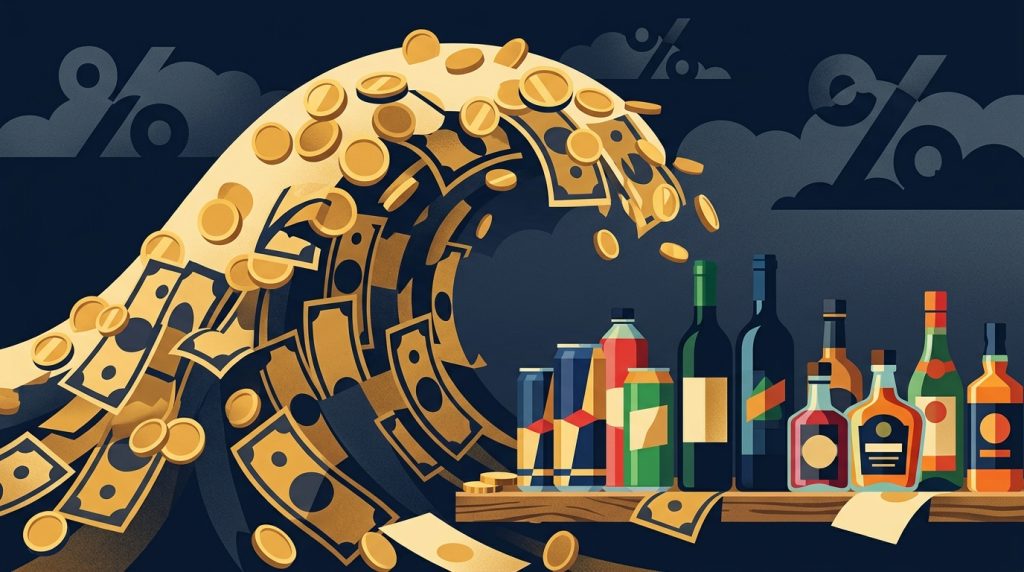
Some of the planned rises will hit Poles' wallets directly. The government does not hide that changes to VAT, excise duty and regulatory fees will be reflected in the prices of many everyday products. Here are the most important changes you will notice at the till:
- Higher VAT on drinks (PLN 1.3 billion) - the VAT rate on energy drinks, iced coffees, alcohol-free beers and wines, and drinks containing at least 20% juice will rise from 5% or 8% to as much as 23%.
- Higher excise duty on alcohol (PLN 1.8 billion including VAT) - the excise rate on beer, wine and intermediate products will rise by around 15%, and on cider and perry by around 26%. Of this amount, PLN 1.4 billion will go as a subsidy to the National Health Fund (NFZ).
- Higher sugar levy (PLN 1.5 billion) - the fixed fee will rise from PLN 0.50 to PLN 0.70 per litre, and the caffeine and taurine fee from PLN 0.10 to as much as PLN 1.00. This means a drastic increase in the prices of energy and sweetened drinks.
- Higher fee on "miniature" spirit bottles (PLN 1.2 billion) - the result of an increase in fees for wholesale alcohol trading permits for packages of up to 300 ml.
In total, the consumer increases alone could generate more than PLN 5.8 billion in additional revenue. For the average household this means a noticeable rise in spending on food and drink, particularly in the energy drinks segment, which will be hit by both higher VAT and a significantly more expensive sugar levy.
How can business owners prepare for the changes?
Rising fiscal burdens are a signal that tax planning is becoming a necessity rather than a luxury. For companies in the energy, fuel and technology sectors in particular, the coming changes may mean a need for a thorough review of the business structure. But smaller businesses will also feel the effects - higher costs of products and services will translate into price pressure across the whole supply chain.
With an appropriately planned corporate structure, business owners can, as a rule, optimise their tax burden in a fully lawful way. For companies operating in Poland, one solution worth analysing is a company structure with a foreign shareholder, which may allow an effective CIT rate of 9% while protecting private assets and providing preferential taxation of dividends. This solution is gaining popularity, especially in the context of rising tax rates.
It is worth remembering that every situation is different - the tax consequences depend on individual circumstances, the ownership structure and the type of business carried on. That is why it is crucial to carry out a professional tax audit before the new rules enter into force, rather than looking for solutions reactively after the fact.
Don't wait for the increases - plan your tax structure now
The year 2027 will bring an unprecedented scale of tax changes in Poland. Whether you run a business in a sector directly affected by the increases or will feel them indirectly through higher costs, it is worth analysing your tax position now.
The Global Accounting team has spent more than 10 years helping business owners design and implement tax structures suited to a changing legal environment. The first 15-minute consultation is free and allows a preliminary assessment of which solutions may be suitable for your company.
Book a free consultation: call +48 505 684 412 or write to [email protected]. Find out how to prepare your business for the coming tax changes lawfully and safely.
Have a question about this?
The first consultation is free - let us talk about your situation.