Why is Poland ceasing to compete on low labour costs?
For years, one of the main arguments for placing capital in Poland was low labour costs and a relatively light tax burden. That model is gradually becoming a thing of the past. According to the CEE Tax Guide 2026 report prepared by Forvis Mazars, labour costs in Poland are now higher than in South-Eastern European countries, although they remain lower than in Western Europe.
For entrepreneurs and foreign investors, this means a fundamental change of perspective. Poland now builds its competitive advantage not on cheap labour, but on the strength of its domestic market, the scale of consumer demand and access to a skilled workforce. The Central and Eastern European region is evolving towards a model based on added value - shared service centres, development centres carrying out R&D projects and advanced business processes are becoming more important than simple cost savings.
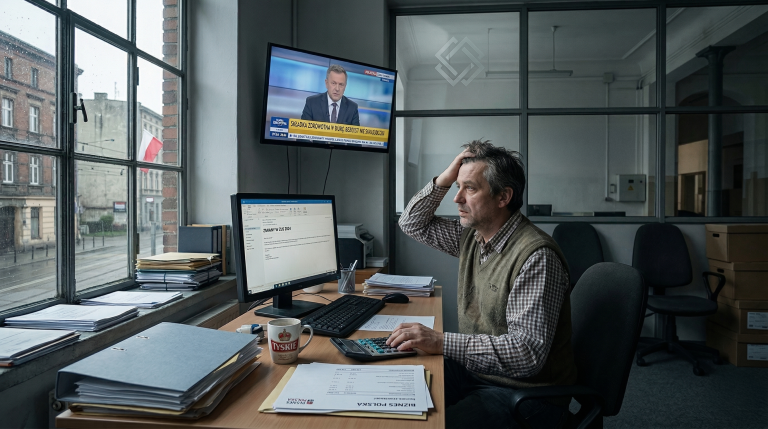
It is also worth noting the growing regulatory pressure. The strengthened powers of the National Labour Inspectorate (PIP) to verify forms of employment mean that the scope for using alternative working arrangements as a cost-optimisation tool continues to narrow. For companies planning to expand into the Polish market, professional legal and tax advice therefore becomes essential to plan the employment structure properly.
What attracts foreign investors to Poland today?
If low taxes and labour costs are losing importance, what then determines the choice of Poland as an investment location? Experts point to several key factors that are worth considering from both a legal and a business perspective.
Main factors behind Poland's investment appeal in 2026
- Scale and stability of domestic demand - Poland is the largest consumer market in the CEE region, which ensures stable revenue for companies operating on the domestic market.
- High-quality human capital - access to educated specialists, including engineers, programmers and financial experts, attracts shared service centres and technology companies.
- Advanced logistics infrastructure - an extensive motorway network, modern ports and intermodal terminals make it easier to run supply chains on a European scale.
- Proximity to Western European markets - the strategic geographical location enables efficient distribution of goods and services to markets with the highest purchasing power.
- Macroeconomic stability - despite inflationary challenges, the Polish economy remains one of the fastest-growing in the European Union.
From a legal point of view, each of these factors comes with specific compliance requirements. Investors must take into account regulations on employment law, personal data protection, public procurement and sector-specific rules. Professional legal support helps minimise risk and make full use of the potential of the Polish market.
KSeF and JPK_CIT - a digital revolution in taxation
One of the most serious operational challenges for businesses operating in Poland is the digitalisation of the tax system. Since April 2026, the National e-Invoicing System (KSeF) has been mandatory and covers the vast majority of taxpayers. The system requires companies to comprehensively adapt their invoicing processes, integrate with ERP systems and train staff.
For larger organisations, implementing KSeF meant IT and organisational projects lasting many months. For smaller entities - often relying until now on paper documentation - the change was even more noticeable. It forced them to abandon established practices and move to a fully digital document flow.
At the same time, the Standard Audit File for CIT (JPK_CIT) was introduced, which significantly increases the scope, level of detail and frequency of data reported to the tax authorities. In addition, there is the implementation of the global minimum tax (Pillar II), whose first reporting obligations fell in 2026. The tax administration thus gains unprecedented real-time access to companies' financial data.
Consequences for businesses
The new digital obligations mean higher compliance costs and the need to reorganise finance and accounting departments. Companies that fail to adapt to the new requirements expose themselves to administrative and criminal sanctions. Regular audits of tax processes with the involvement of specialist legal and tax advisers therefore become essential, helping to identify gaps in documentation and ensure compliance with the rules.
Stability of the law matters more than the level of taxes
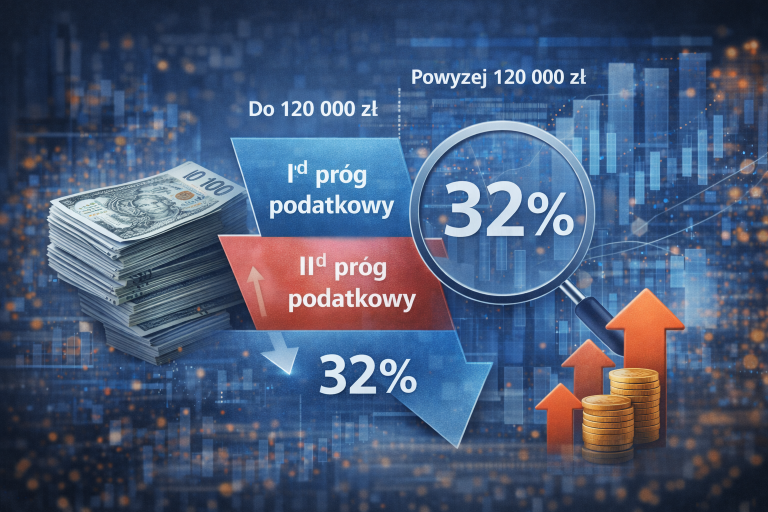
Paradoxically, Polish tax rates - 19% CIT under the standard regime and 9% CIT for smaller taxpayers - remain competitive within the region. The problem that businesses have pointed out for years lies elsewhere: in frequent changes to legislation, differences in interpretation and an increasingly intensive approach by the tax authorities to inspections.
In business practice, the concept of a stable tax system today means not so much unchanged rates as a predictable regulatory environment. An investor must be certain that the rules of the game will not change during a multi-year investment project. Meanwhile, the Polish tax system is highly complex - overlapping reporting obligations, rules on transfer pricing, withholding tax and due diligence standards create a complicated mosaic of requirements.
For companies operating in Poland, the tax and regulatory area has taken on a clearly strategic dimension. Effective tax risk management is no longer solely the domain of the accounting department - it requires the involvement of the board, lawyers and external advisers. Companies that treat compliance as an investment rather than a cost will gain a real competitive advantage in the form of operational security and credibility with counterparties and administrative authorities.
How to prepare your business for the new tax reality?
The changing legal and tax environment in Poland requires a proactive approach from businesses. Waiting until the last moment to implement new obligations creates unnecessary risk and cost. Here are the key steps worth taking now:
- Tax audit - a comprehensive review of existing filings for compliance with KSeF, JPK_CIT and Pillar II rules.
- Review of the employment structure - verification of the forms of cooperation in use in light of the PIP's strengthened inspection powers.
- Transfer pricing analysis - updating transfer pricing documentation and policy to reflect the tightened requirements of the tax authorities.
- Investment in IT systems - integrating ERP solutions with KSeF and preparing the infrastructure for real-time reporting.
- Ongoing cooperation with a law firm - continuous monitoring of legislative changes and their impact on the company's operations.
The Polish regulatory environment is changing dynamically, but at the same time offers businesses real advantages - provided they can navigate an increasingly complex legal system. Professional legal and tax advice is today not a luxury, but an essential element of the strategy of every company doing business in Poland.
Do you need support in adapting your business to the new tax requirements? Contact our firm - our experts will help you get through the regulatory changes safely and protect the interests of your business.
Have a question about this?
The first consultation is free - let us talk about your situation.