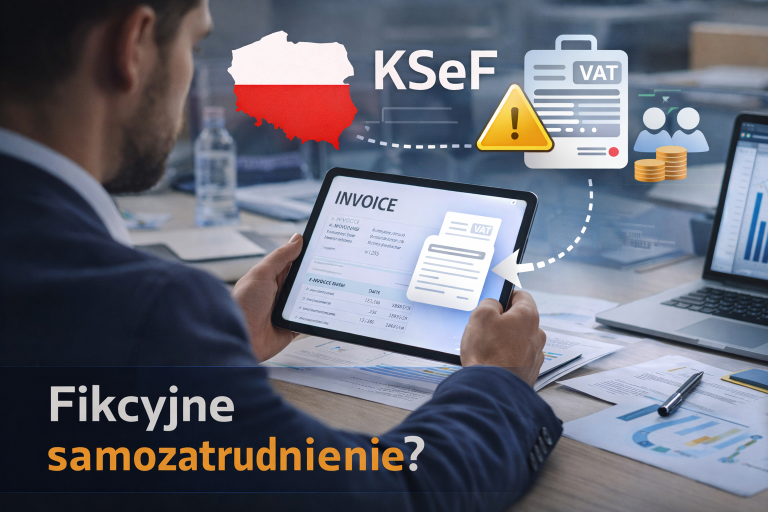
The introduction of the National e-Invoicing System (KSeF) is one of the biggest changes to the Polish tax system in recent years. The aim of the new solution is the full digitalisation of VAT invoice flow and a tighter tax system, particularly in VAT settlements and the elimination of abuse.
Although KSeF will become mandatory, the tax administration has announced that 2026 will be a transitional period in which businesses will not be penalised for errors related to using the system. This is important information for companies that are concerned about the consequences of the first months of the new invoicing model.
What is KSeF and why is it being introduced?
KSeF is a central system in which VAT invoices will be:
- issued in a uniform format,
- stored electronically,
- made available to the tax administration in real time.
As a result, the tax authorities gain immediate insight into business turnover, which allows them to detect irregularities, formal errors and attempted tax fraud more quickly. For honest businesses, this means greater transparency and potentially less burdensome inspections in the future.
No penalties in 2026 - what does this mean in practice?
One of the key elements of the KSeF rollout is the decision to impose no sanctions in the first year the system is in force. In 2026, businesses will not be penalised for:
- technical errors when issuing invoices in KSeF,
- problems integrating accounting systems,
- delays resulting from adapting procedures.
However, this does not mean that KSeF is voluntary. The obligation to use the system remains, and the absence of penalties is only meant to allow companies to implement and test new processes calmly, without financial risk.
KSeF as a tool for inspection and data analysis
Although no penalties will be applied in the first year, KSeF serves as an analytical tool from the outset. The data collected in the system allows the tax administration to:
- analyse invoice flows,
- identify unusual settlement patterns,
- select entities for future inspections.
This means that even during a period without sanctions, the way a business uses KSeF may matter in the longer term. Companies that do not prepare properly for the new standards may find themselves under increased scrutiny in the years ahead.
The KSeF obligation - why you should not put off preparations
Despite the announcement of a gentle start, businesses should not treat 2026 as a time for inaction. KSeF will become the primary invoicing tool, and a lack of operational readiness may lead to:
- problems issuing and receiving invoices,
- delays in settlements with contractors,
- organisational chaos in accounting departments.
Implementing KSeF requires adapting financial and accounting systems and internal procedures, as well as training the staff responsible for invoicing and tax settlements.
How to prepare your company for KSeF
To enter the new system safely, it is worth taking the following steps:
- review your current invoicing processes,
- check the readiness of your accounting and ERP systems,
- plan the integration with KSeF,
- introduce procedures for checking data accuracy,
- train your finance and accounting team.
A well-prepared company can treat KSeF not as a threat, but as a tool that streamlines document flow and reduces the risk of errors.
Summary
The National e-Invoicing System is a key element of the digital transformation of taxes in Poland. Although 2026 is meant to be a period without penalties, KSeF will be collecting data and bringing order to the settlement system from the very beginning. Businesses that prepare early for the new rules will gain not only operational peace of mind, but also greater tax security in the years to come.
Have a question about this?
The first consultation is free - let us talk about your situation.