The situation in the Middle East has escalated sharply, entering a phase of direct military confrontation between Israel and the US on one side and Iran on the other. The largest Polish and international news outlets report attacks on energy infrastructure, air strikes on Tehran and the paralysis of key trade routes. We analyse how this geopolitical shock will affect the prices and availability of products worldwide and in Poland.
The facts: an escalation unseen for years
According to reports from outlets such as Reuters, BBC and the Polish Onet, in March 2026 the regional conflict turned into open war. The key flashpoints are:
- Attacks on oil and gas infrastructure: Israel carried out precision strikes on Iranian energy installations, including refineries in Tehran (Onet, XYZ). In retaliation, Iran attacked a refinery in Bahrain and is threatening further strikes on installations in the Persian Gulf (PAP, Obserwator Finansowy).
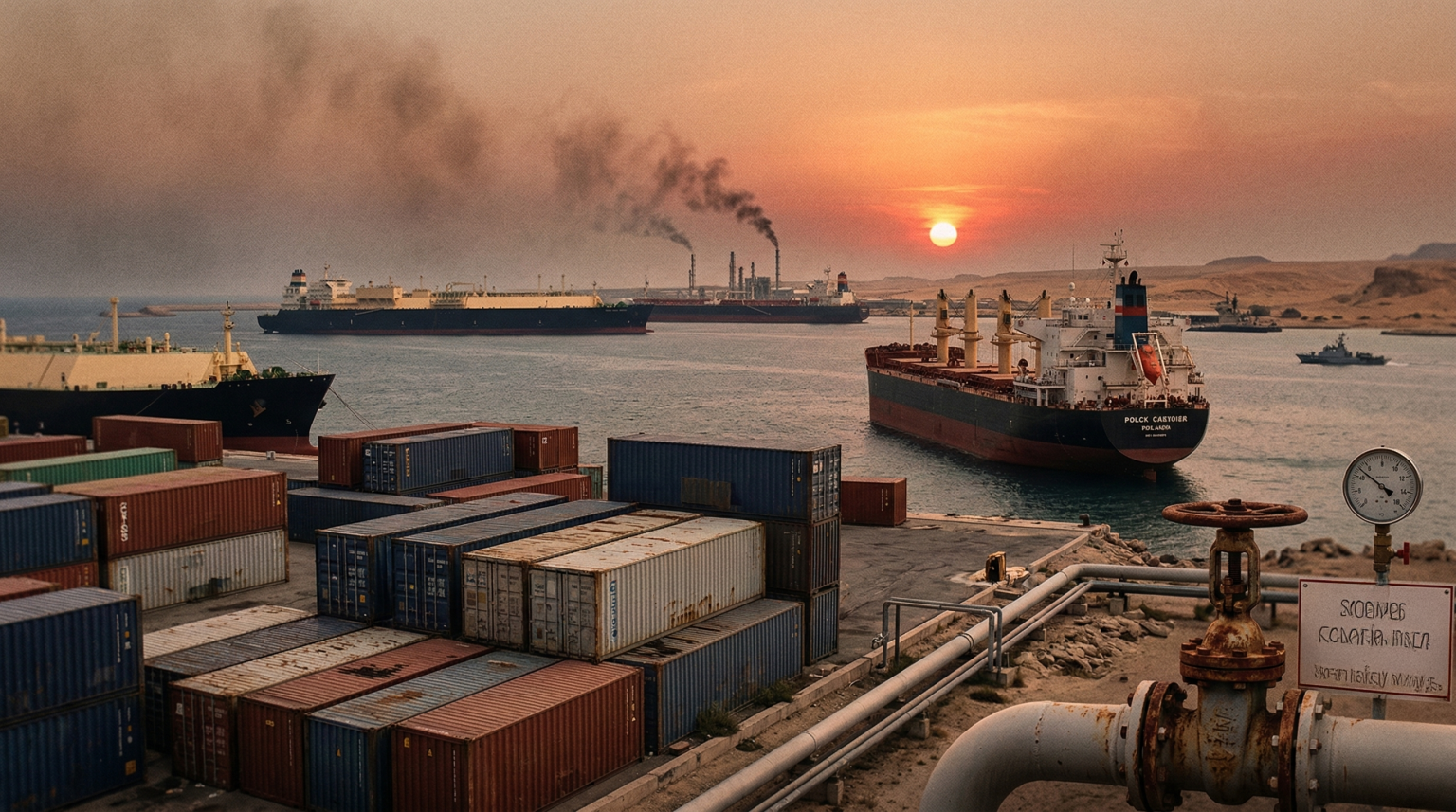
- Blockade of the Strait of Hormuz: Iran has announced a "hybrid blockade" of this key sea route, through which around 20-30% of the world's oil transport and 20% of LNG flows (mBank Research, Analizy.pl, BBC). Insurers are withdrawing cover for ships in the region en masse, and shipowners are suspending shipments (OKO.press, ING THINK).
- Qatar halts LNG production: QatarEnergy has declared force majeure and suspended the operation of its gas liquefaction facilities, a direct consequence of the military threat in the region (OKO.press).
Impact on the global market
The global economy, barely recovering from previous energy crises, now faces a major supply shock.
1. Fuels and energy
This is the fastest and most visible effect. The price of a barrel of Brent crude quickly broke through the $100 barrier (Tygodnik Solidarność), and the BBC reported price jumps of 10% within a single day (BBC). The natural gas market in Europe reacted even more sharply, with prices rising by several dozen per cent in response to the halt in supplies from Qatar (OKO.press, BBC).
2. Supply chains and freight
The paralysis of the Strait of Hormuz means that around 10% of the global container fleet is stuck in bottlenecks (Wieści Rolnicze). Rerouting ships onto longer routes (e.g. around Africa) drastically increases freight and insurance costs (OKO.press). This affects not only energy commodities but all goods transported by sea from Asia to Europe, including electronics, automotive components and textiles (Ticker/YouTube).
3. Fertilisers
The Persian Gulf region accounts for one third of the world's trade in nitrogen fertilisers such as ammonia and urea (XYZ). The risk of restrictions on exports of these products threatens a global fall in crop yields and another wave of food price increases in the coming seasons (XYZ).
Impact on the Polish product market
Poland, as an economy closely integrated with the EU market and dependent on imported raw materials, will feel the effects of the conflict in several ways.
1. Drastic price rises at petrol stations
Although companies such as ORLEN reassure that supplies to Poland are secured thanks to strategic reserves and diversification (Petrolnet.pl), wholesale prices, set on the basis of global quotations, are rising rapidly. Market experts estimate that in the short term petrol could become more expensive by around 20 groszy, and diesel by as much as 50 groszy per litre (XYZ, Radio Białystok). If the conflict drags on, prices could reach record levels, which has prompted the Polish government to consider cutting VAT and excise duty on fuels (Tygodnik Solidarność).
2. The domino effect: inflation and production costs
Higher fuel and gas prices mean higher transport and energy costs for all Polish businesses. With a delay, this will feed through into the prices of all consumer products. Economists at mBank indicate that the baseline scenario assumes a reduction in Poland's GDP and a rise in inflation (Business Insider).
3. The food market: costlier production and exports
The rise in fertiliser prices (Grupa Azoty has already suspended its existing price lists for nitrogen fertilisers because of the jump in gas prices - Wieści Rolnicze) will raise agricultural production costs in Poland. In addition, higher freight and insurance costs will reduce the competitiveness of Polish agri-food exports (especially meat and dairy) on non-European markets (Wieści Rolnicze).
Summary
The situation in the Middle East is dynamic and unpredictable. The market is currently pricing in the worst-case scenario: a prolonged blockade of the Strait of Hormuz and the destruction of energy infrastructure. For Polish consumers and business owners this means one thing: the need to prepare for another wave of rising prices, triggered by record fuel and energy costs.
(This post is an analysis prepared on the basis of available media sources and market data from the beginning of March 2026 and is for information purposes only.)
Have a question about this?
The first consultation is free - let us talk about your situation.