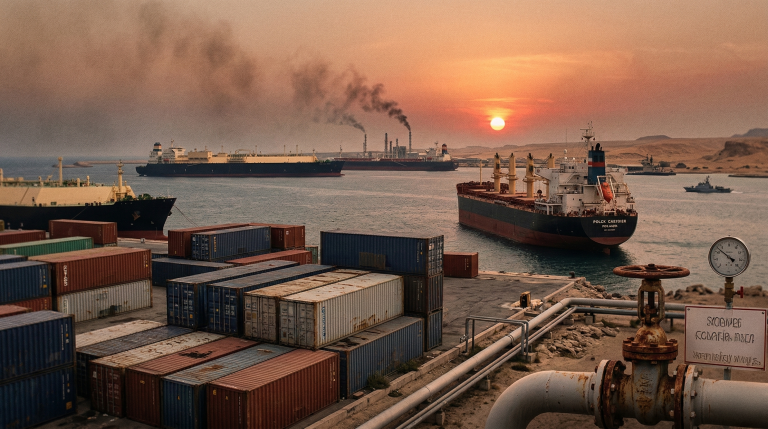
In January 2026, the European Union and India moved closer to finalising one of the most important trade agreements of recent decades, described in the media and in analyses as "the mother of all deals". It is a free trade agreement (FTA), the effects of which may be felt not only in Europe and Asia, but across the global economy.
The negotiations lasted almost two decades, and the agreement reached opens up a huge consumer and production market covering a total of around 2 billion people and nearly a quarter of global GDP.
What the EU–India trade agreement is
The agreement between the European Union and India is a comprehensive free trade agreement, intended to:
- abolish or significantly reduce customs duties on most goods exported between the parties,
- increase access to services and investment,
- simplify customs and regulatory procedures,
- strengthen cooperation in areas such as intellectual property, digital trade and dispute resolution.
The agreement is the result of negotiations that began in 2007 and for many years ran into difficulties relating to regulatory differences, tariffs and the protection of sensitive sectors. The new FTA is intended to open the Indian market to goods and services from the EU and make Europe a more competitive economic partner.
The scale and significance of the "mother of all deals"
The agreement covers a market of around two billion consumers, making it one of the largest agreements of its kind in the world. In practice, this means that:
- European goods - from cars and machinery to high-tech products - will have easier access to the Indian market thanks to reduced duties and simplified procedures,
- Indian products - such as textiles, IT services and industrial goods - will gain preferential access to the EU market,
- cooperation may also extend to technology, financial services and joint infrastructure investments.
The agreement has the potential to increase bilateral trade to more than $200 billion and accelerate economic integration between two of the world's major trading powers.
What does this mean for business owners?
For Polish and European companies, the agreement with India opens up new prospects:
- access to a large and growing market, particularly in the industrial, technology and services sectors,
- reduction of trade barriers, which may lower export costs and increase the competitiveness of products,
- a stronger investment position in the South Asia region.
India is an economy with great growth potential, with a growing middle class and demand for consumer goods, technology and services. The agreement may increase the interest of European investors and strengthen the position of European companies in global supply chains.
Challenges and potential risks
Although the potential of the agreement is enormous, this does not mean that every business will benefit automatically. Business owners must take into account:
- regulatory differences and technical standards, which may require products to be adapted,
- the need to adjust export and logistics strategies,
- potential reactions from the labour market and from sensitive industries seeking protection, which may call for time to adapt.
In addition, the agreement must still go through a ratification process by the parliaments of the EU member states and by the Indian authorities before it takes full effect.
Summary
The agreement between the European Union and India, described as "the mother of all deals", is a historic step towards global trade integration. Opening the market to around 2 billion consumers creates exceptional export and investment opportunities, particularly for businesses in the industrial, technology and services sectors. At the same time, implementing such a wide-ranging FTA requires strategic preparation - in both legal and operational terms. This is a moment when businesses can genuinely accelerate their global expansion plans.
Have a question about this?
The first consultation is free - let us talk about your situation.