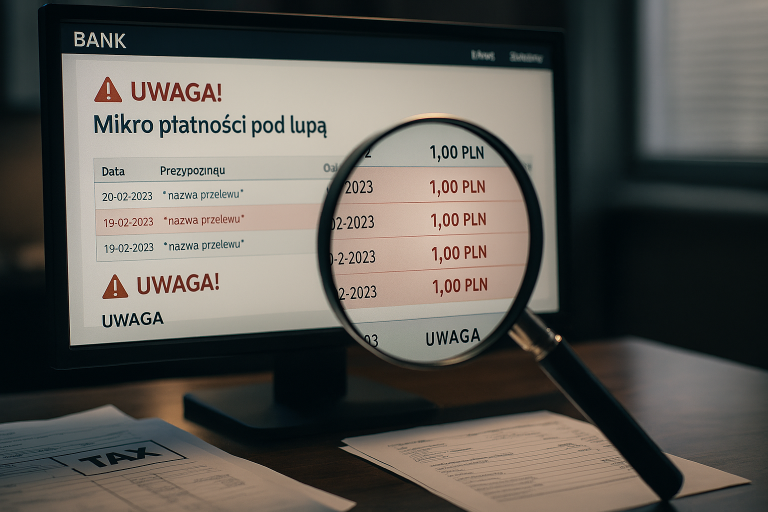
From 1 January 2026, the next stage of control over cashless payments in Poland comes into force. Banks will be required to pass on data on all transactions made with business payment cards - regardless of the type of card, the form of payment or the place of use.
Individuals will also come under the tax authorities' scrutiny, although in their case reporting will cover only card transactions once the threshold of EUR 25,000 per year (around PLN 106,000) is exceeded. Once this limit is reached, the bank will send the Polish Tax Office (urząd skarbowy) information on all card payments made in that year.
What is changing?
From 2026, banks will regularly send the tax authorities reports on card transactions. The reports will include, among other things, the cardholder's details, account numbers, the amounts of deposits and charges, and the details of each operation.
This means that the tax offices will gain full insight into how businesses and individuals use their cards. For the tax authorities, it will be another tool for comparing expenditure with declared income.
Why are these changes being introduced?
The new rules are intended to curb the so-called grey economy and to improve the detection of undisclosed income. Thanks to the reporting of payment cards, the tax administration will be able to check whether expenditure matches actual income and sources of funding.
In practice - if a business owner regularly pays by card for goods or services but does not report any income from their business, the tax office will be able to initiate clarification proceedings.
What does this mean for business owners?
For companies and people running a business, this means they need to be more careful when using payment cards. Every transaction may be analysed by the tax authorities, so you should avoid mixing private and business expenses.
In the case of sole proprietorships (JDG), it is worth putting your rules for using cards in order now and clearly defining which expenses are business-related and which are personal.
How to prepare?
- Check that all business expenses paid by card are properly documented.
- Keep private and business cards separate and do not use one card for both purposes.
- Introduce a card spending policy in your company - who may pay by card, for what and up to what amount.
- Regularly review your bank statements and compare them with your accounting records.
- Consult a tax adviser or lawyer to prepare for the new obligations.
To finish - with a pinch of salt
Imagine your payment card becoming an actor in an action film. Until now it has played a supporting role, but from 2026 it steps onto the stage in the spotlight. In the role of director - the National Revenue Administration (KAS). Every move, every tap on the terminal - everything will be recorded.
There is no need to panic. It is enough that your expenses are transparent and your documentation is in order. Then even the most inquisitive tax inspector will find nothing that could take you by surprise.
It is worth preparing your business for the new payment card reporting now.
If you need support with risk analysis, implementing procedures or drawing up rules for using cards in your business - our firm's team will be happy to help.
👉 Contact us to arrange a free consultation.
Have a question about this?
The first consultation is free - let us talk about your situation.