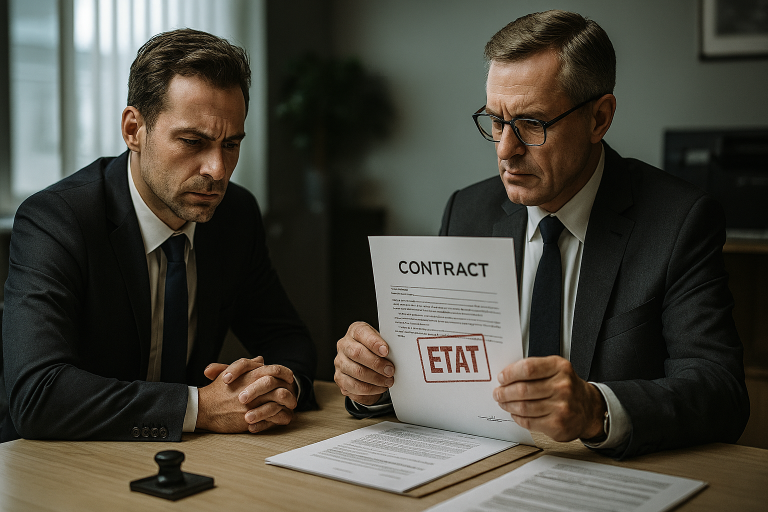
A record number of ZUS inspections - what does the latest data say?
The Social Insurance Institution (ZUS) is steadily stepping up its inspection activity towards Polish businesses. According to the latest report by the audit and advisory firm Grant Thornton, as many as 29.6 thousand inspections were carried out last year - a significant increase compared with 2022-2023, when the number of inspections hovered around 27 thousand. The statistics show that the average annual growth in the number of inspections over the last five years was as much as 25%.
What is particularly worrying from a business owner's perspective is that the effectiveness of inspections is extremely high. Last year irregularities were found during 27.4 thousand visits, which means that as many as 93% of all inspections ended with the discovery of shortcomings. Five years ago this figure was around 75%, and over the last two years it has exceeded 90%. This trend clearly shows that ZUS inspectors are working ever more precisely, and the risk of a negative inspection outcome is greater today than ever before.
This data should be a clear warning signal for every employer. A ZUS inspection is no longer a theoretical threat - it is becoming a real operational risk, which may result in an obligation to pay overdue contributions together with interest, as well as severe financial and organisational consequences.
How does ZUS select companies for inspection? Modern analytical tools
The days of random inspections are fading into the past. ZUS now has advanced predictive models and access to vast data resources - both current and historical. Analytical algorithms allow inspectors to single out specific entities from the entire population of contribution payers, which drastically increases the accuracy and effectiveness of inspections.
It is worth stressing that ZUS uses data from many sources, including job advertisement portals, social media and public registers. On this basis, inspectors can verify whether the declared employment model matches reality. They pay particular attention to discrepancies between the content of recruitment adverts and the form of employment shown in the insurance documentation.
The most frequently inspected areas of business activity include:
- Civil law contracts - verifying whether contracts of mandate or for specific work disguise an actual employment relationship
- Business trips - the correct settlement of per diems and travel allowances
- Posting of employees - compliance with the rules on the coordination of social security systems
- Non-wage benefits - the correct application of contributions to employee benefits
- Registering persons for insurance - the timeliness and completeness of registrations
- Calculating and paying contributions - the correct determination of the contribution base
ZUS's shift in strategy from random inspections to analytical and targeted inspections means that business owners cannot count on an inspection "passing them by”. Companies whose employment models depart from industry standards are particularly exposed to being selected for review.
Who does ZUS inspect most often? Industries and company sizes under the microscope
The Grant Thornton report clearly shows that micro and small businesses are the main target of ZUS inspections. These companies account for nearly 75% of all inspections carried out in recent years. Medium-sized businesses make up around 20% of inspected entities, while large companies are only 5% of the payers visited.
These statistics may seem surprising, but they have a logical explanation. Smaller companies often lack specialised HR and payroll departments or internal compliance procedures, which makes them more prone to errors in their dealings with ZUS. It is worth noting that last year there were on average 68 insured persons per inspected payer.
Industries most frequently inspected by ZUS
As for the industry profile of inspected companies, data from the last five years points to two sectors that inspectors visit particularly often. These are primarily businesses engaged in education and retail trade (excluding trade in motor vehicles). The exception was 2021, when inspectors most often inspected companies engaged in wholesale and retail trade at the same time.
The duration of inspections is also changing. Inspectors now need on average seven calendar days to carry out an inspection. In recent years this time has been steadily falling, which points to growing efficiency and better substantive preparation of inspectors even before they visit the company's premises.
Upcoming changes - ZUS will take over the calculation of contributions
In addition to the intensification of inspections, business owners face another important change. Under the government's draft amendment to the Social Insurance System Act, ZUS will be able to prepare proposed insurance documents on the basis of the Uniform Insurance File (JPU) supplied by the payer. The key aim of the reform is for ZUS to take over many tasks related to determining the contribution base and calculating contributions.
On the one hand, this reform may relieve business owners of some administrative duties; on the other, it means even greater transparency of the data submitted to ZUS. Any discrepancy between the actual situation and the data in the system will be immediately visible, which may result in the company being automatically selected for inspection.
In light of these changes, experts stress the need to introduce regular internal audits of HR and payroll processes. As Anna Szczepska of Grant Thornton points out, these audits are becoming a key tool for minimising the risk of corrections, sanctions and loss of trust from employees and associates.
How to prepare your company for a ZUS inspection? Practical tips
In the face of a growing number of inspections and their record effectiveness, every business owner should take specific preventive action. Proper preparation not only minimises the risk of irregularities being detected, but also allows you to get through the whole inspection process smoothly, without unnecessary stress and financial losses.
Key steps worth taking now:
- Carry out an audit of your HR and payroll documentation - check the correctness of contracts, insurance registrations and contribution calculations for recent years
- Verify the classification of civil law contracts - make sure that contracts of mandate and for specific work are correctly classified and do not have the characteristics of an employment relationship
- Check that contributions on non-wage benefits are applied correctly - sports cards, medical packages or vouchers can be a source of costly errors
- Introduce compliance procedures - create internal standards for verifying settlements with ZUS
- Consult a lawyer specialising in social insurance law - a professional analysis can reveal risks that are not visible at first glance
Remember that the costs of preparing for an inspection are always many times lower than the consequences of irregularities being detected - overdue contributions together with interest, financial penalties and, in extreme cases, even criminal liability.
Do not wait for a letter from ZUS announcing an inspection. Contact our firm today - we will help you carry out a comprehensive audit of your settlements with ZUS, identify potential risks and put effective protective procedures in place. Our specialists in employment and social insurance law will make sure your company is prepared for any inspection. Call or write - the first consultation will allow us to assess the scale of any potential risks.
Have a question about this?
The first consultation is free - let us talk about your situation.