700 tonnes of gold in NBP reserves - a historic achievement
At the November press conference, the President of the National Bank of Poland (NBP), Prof. Adam Glapiński, announced that the NBP has accumulated 700 tonnes of gold in its foreign exchange reserves. By his own admission, this was a goal that not long ago seemed difficult to achieve, and it was accomplished on his initiative. Since the start of Glapiński's term, the NBP's gold holdings have grown almost sevenfold, by exactly 598 tonnes.
At current market prices, the value of the bullion held is PLN 355.7 billion, of which the unrealised profit is as much as PLN 140.5 billion. It is worth distinguishing between two categories that are sometimes confused in public debate - the unrealised profit on gold (the difference between the purchase price and the current valuation) becomes a realised profit only when the bullion is sold, whereas the NBP's annual financial result is a separate accounting balance.
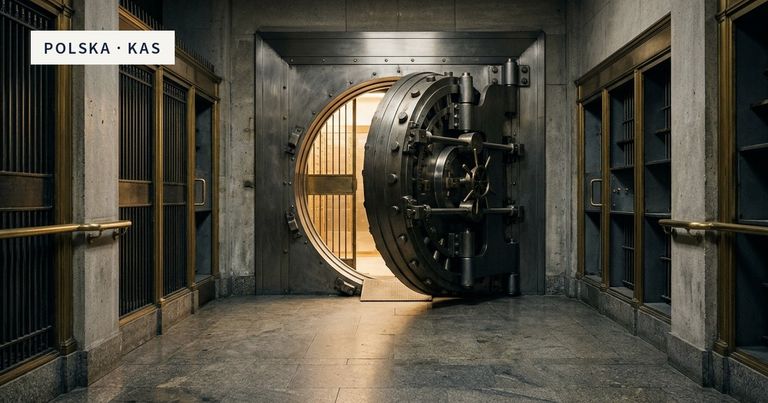
Poland has thereby consolidated its position among the ten countries with the largest gold reserves in the world. As the NBP President stressed, holding such substantial reserves stabilises the financial system, strengthens the international perception of the Polish economy and confirms the country's credibility as a trade and investment partner. In line with the strategy of the NBP Management Board, the target allocation model assumes the bullion is divided equally into thirds: in the vault of the Federal Reserve System in New York, at the Bank of England in London, and in Poland - in the vault being modernised at Plac Powstańców Warszawy in Warsaw.
Interest rates unchanged - the RPP waits for developments
Under the decision of the Monetary Policy Council (RPP) of 4 November 2026, NBP interest rates remained at their existing level. The current rates are:
- Reference rate - 3.75% per annum
- Lombard rate - 4.25% per annum
- Deposit rate - 3.25% per annum
- Rediscount rate for bills of exchange - 3.80% per annum
- Discount rate for bills of exchange - 3.85% per annum
The decision to keep rates unchanged did not surprise analysts, although, as Glapiński himself admitted, the RPP's stance has clearly shifted. Not long ago, potential cuts were being discussed, whereas the Council's approach has now become decidedly more hawkish. The NBP President used a colourful comparison, describing the RPP's composition as a "mixed flock" in which hawks and doves live together peacefully.
Asked about the possibility of a rate rise in December, Glapiński noted that December is traditionally a month in which decisions of this kind are very rarely taken. However, a big question mark hangs over the first quarter of next year - the RPP will analyse incoming data, economic conditions and the price situation.
Inflation has fallen, but risks remain
Very good news from the conference was the fall in inflation in October. According to preliminary data, the CPI rate was 3.5%, which means that price growth is once again within the band of deviations from the NBP's inflation target (2.5% +/- 1 percentage point). Core inflation has probably also fallen, which President Glapiński welcomed with evident satisfaction.
At the same time, the RPP clearly recognises risks to price stability in the coming months. The key sources of uncertainty are primarily:
- The conflict in the Middle East - driving up energy commodity prices; according to the NBP President, gas prices in Europe are as much as 2.5 times higher than at the beginning of the year
- The expiry of protective shields - from the start of the new year, government regulations limiting fuel prices may cease to apply, which will translate directly into electricity and gas bills
- The risk of second-round effects - the longer energy prices remain high, the greater the likelihood that higher costs will feed through into the prices of other goods and services
So far, businesses have had limited ability to pass higher costs on to final prices - they are held back by weakened demand and strong market competition. As the NBP President emphasised, wage growth has also slowed - wage growth across the whole economy in the second quarter was 5.5%, and in the enterprise sector it remained below 6%. From the point of view of monetary policy, these are factors that favour disinflation.
Slowing GDP growth and weakness in the European economy
The NBP President forecast a further slowdown in gross domestic product growth, pointing to the fading of strong investment stimuli in the form of funds from the National Recovery Plan (KPO) and the Cohesion Fund. This year Poland is at the peak of using these funds, but next year this support will no longer be there.
Glapiński also devoted considerable attention to the weakness of the EU economy. The situation in the eurozone, including Germany - Poland's main trading partner - although marginally improved, remains very weak. All available forecasts indicate that economic growth in the eurozone will remain persistently lower than in the United States or China.
The NBP President was particularly sharp in his assessment of the impact of EU climate policy on the competitiveness of European businesses. As he pointed out, Poland generates electricity on average 40% more expensively than the EU average, twice as expensively as in the USA and three times as expensively as in China. This is a serious barrier to development, which makes it harder for Polish companies to compete on international markets and holds back investment in new technologies, including artificial intelligence.
Against the background of Europe, Poland still remains a dynamic centre of growth, steadily closing the gap in GDP per capita growth with Western European economies. However, as Glapiński noted, the faster the growth, the stronger the tendency for prices to rise, and when momentum weakens, price pressure subsides.
The zloty exchange rate and the NBP's financial result
President Glapiński also addressed exchange rate policy, reminding listeners that the Polish zloty is a floating currency. The NBP does not intervene on the foreign exchange market unnecessarily and has no fixed idea of the "right" exchange rate level. Interventions take place only exceptionally - when volatility is too sharp and could harm businesses.
Glapiński stressed that the NBP is not guided by its financial result in its actions - the central bank's main statutory task is the fight against inflation. At the same time, he noted that the bank does not feel obliged to cover losses from previous years under the European Central Bank's rules, because Poland is not a member of the eurozone.
For entrepreneurs running international operations, exchange rate fluctuations and changing interest rates are a significant element of financial planning. In such a volatile macroeconomic environment, it becomes crucial to plan the structure of your business properly - both with a view to optimising tax burdens and to protecting assets through a suitably chosen legal form. A well-designed structure, e.g. a limited liability company (sp. z o.o.) with a foreign shareholder or a holding company, can in principle allow costs to be managed effectively while remaining fully compliant with the regulations.
How to protect your business in uncertain times? Free consultation
The unchanged interest rates, growing inflation risks and economic slowdown in Europe are signals that no entrepreneur should ignore. Whether you run a sole proprietorship, a company, or are planning international expansion, it is worth reviewing the current legal and tax structure of your business.
The specialists at Global Accounting offer comprehensive accounting services and advice on structures that optimise tax burdens - from a limited liability company (sp. z o.o.) with, in principle, an effective 9% CIT rate, through branches of foreign entrepreneurs, to family foundations providing asset protection and succession. Every situation requires individual analysis, so the first step should be a conversation with an adviser.
Book a free consultation - call +48 505 684 412 or complete the form at globalaccounting.com.pl. The first 15 minutes of the conversation are free.
Have a question about this?
The first consultation is free - let us talk about your situation.