Inflation in October 2026 - Statistics Poland (GUS) confirms a clear fall
Data published on 30 October 2026 by Statistics Poland (GUS) brings long-awaited relief. According to the flash estimate, inflation in October 2026 was 3.5% year on year - a clear slowdown after three months of steady increases. The average level of consumer goods and services prices was therefore 3.5% higher than in October 2025.
Importantly, the result was better than economists' forecasts, whose average estimate pointed to inflation falling only to 3.7%. A difference of 0.2 percentage points in our favour is a positive signal for both consumers and business owners planning budgets for the coming months.
It is worth recalling the trajectory of recent months, which gave legitimate cause for concern:
- July 2026 - annual inflation at 3.0%
- August 2026 - acceleration to 3.4%
- September 2026 - rise to 4.1%, above the inflation target of the National Bank of Poland (NBP)
- October 2026 - fall to 3.5%
On a monthly basis, however, prices fell by 0.4% compared with September 2026. This means that, month on month, the average Polish household's shopping basket was genuinely cheaper - something that has not happened for quite a while.
Why did inflation fall? The key role of the fuel tax cuts
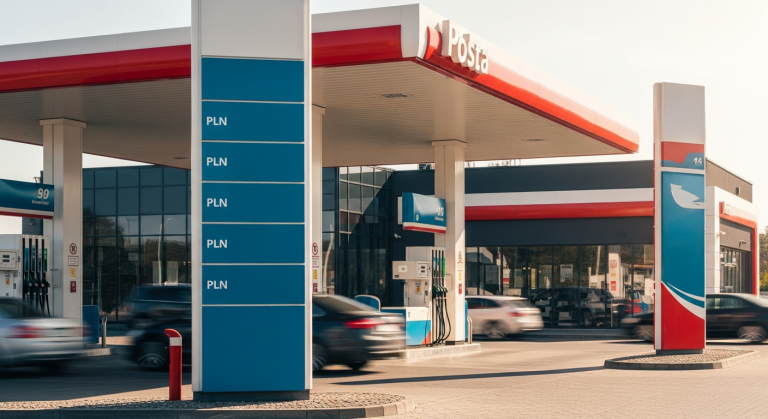
The main driver of the positive change is the package of fuel tax cuts that came into force on 3 October 2026. The government took three simultaneous measures, which fed directly into prices at petrol stations:
- A reduction in the VAT rate on fuel - from 23% to 8%
- A cut in excise duty to the minimum level permitted in the European Union
- The introduction of maximum retail prices for fuel
The effect of these changes is visible in the detailed GUS data. Paradoxically, fuel prices are still rising by almost 22% year on year, owing to a low comparison base from a year ago. However, it was the tax cut that halted further escalation and allowed overall inflation to fall below 4%.
For business owners, especially in transport and logistics, the VAT cut on fuel is genuine relief on operating costs. The lower tax rate means both cheaper refuelling and a change in the way input VAT is accounted for - which in turn requires correct treatment in the accounting records and tax returns.
What is getting more expensive and what is getting cheaper? Details of the inflation reading
The preliminary GUS data points to very varied price dynamics across individual segments. It is worth looking at three key categories that have the greatest impact on household wallets and company budgets.
Fuel - still expensive, but the trend is reversing
The annual rate of fuel price growth remains at close to 22%. This is the highest increase among the categories analysed. However, it should be remembered that the effect of the tax cuts from early October is only just beginning to show up in the statistics. In the coming months, if the new rates are maintained, the annual difference should narrow steadily.
Electricity and gas - moderate increases
Electricity and gas became more expensive by an average of 6% year on year. This is a noticeable increase, but much smaller than in the case of fuel. For companies, it means continuing to factor higher energy costs into pricing calculations and budgets.
Food - stabilisation and hope
The situation in the food segment is a positive sign. Food prices statistically even fell slightly, which, after months of increases, is a comfort for households as well as for the catering and retail sectors. Stable food prices mean less pressure to raise wages and business running costs.
What does falling inflation mean for business owners and their finances?
A change in the inflation trend is not just a statistic - it has a concrete bearing on business decisions. Here are the most important points to keep in mind:
Pricing policy. Lower inflation gives companies more room in setting prices. Pressure to raise prices is easing, and the stabilisation of raw material and energy costs allows margins to be planned more precisely. This is particularly important for businesses operating in highly price-competitive markets.
Payroll costs. Lower inflation should, over time, ease employees' pay expectations. For business owners who have had to cope with rising staff costs in recent months, this is a potential opportunity to stabilise personnel budgets.
Tax compliance. Changing the VAT rate on fuel from 23% to 8% requires updating accounting procedures, adjusting invoicing systems and recording it correctly in VAT registers. Booking the new rate incorrectly can cause problems during inspections and tax settlements. Companies that use professional accounting services can count on their filings being adjusted promptly to changing regulations - including VAT, CIT and PIT returns.
Interest rate outlook. A return of inflation closer to the NBP target could, in the longer term, open the way to interest rate cuts, which would translate into cheaper loans. This is important information for companies planning debt-financed investments.
How to protect your company budget in a changing environment? Free consultation
Falling inflation is good news, but the economic volatility of recent months shows how important it is to have appropriate management of tax costs and company structure. The fuel tax cuts are only one piece of the puzzle - business owners who want to make full use of the available optimisation tools should regularly review their tax position.
The Global Accounting team has supported business owners in Poland for over 10 years with full accounting services, tax advice and the selection of the optimal business structure. Whether you run a limited liability company (sp. z o.o.) or a sole proprietorship (JDG), or are considering a reorganisation, it is worth checking whether your company is being taxed as efficiently as possible and in line with current regulations.
Book a free consultation and find out which solutions could work in your situation. Call +48 505 684 412 or write to [email protected]. The first 15 minutes of the conversation are free.
Have a question about this?
The first consultation is free - let us talk about your situation.