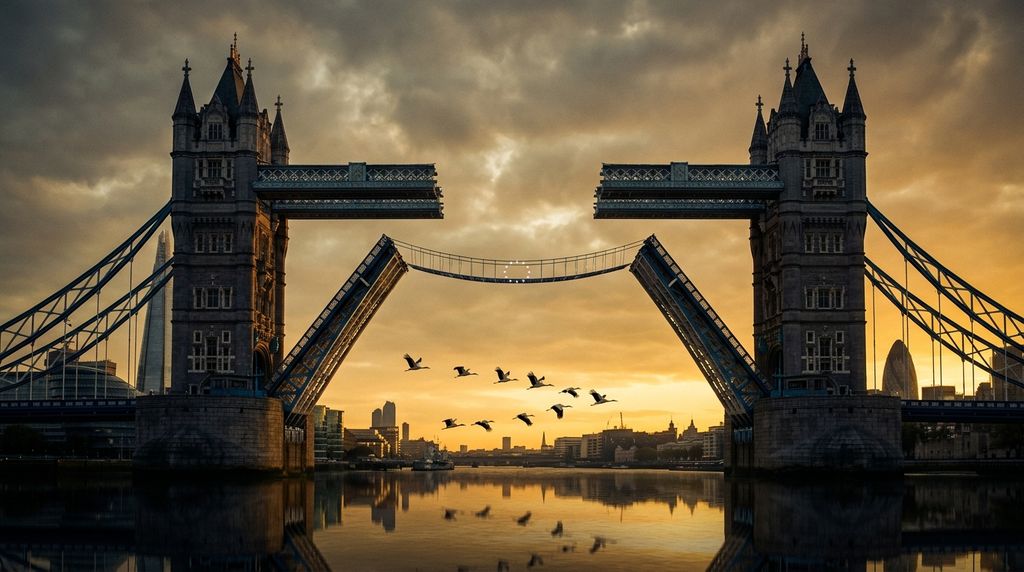
The referendum that surprised everyone
In June 2016, the British people made a decision that shook the whole of Europe. The vote to leave the European Union proved to be a political earthquake - it was predicted neither by the polls nor by the political elites on either side of the English Channel. As Prof. Arkady Żegocki, former Polish ambassador in London who held the post during the key period of the negotiations (2016-2021), recalls, the surprise was widespread.
The professor admits frankly: "I did not expect such a result. Most of the British and European media assumed that the referendum would end with a decision to remain in the Union." What is more, research showed that more than 80% of British civil servants were opposed to leaving the EU - which from the very beginning made the Brexit process exceptionally difficult administratively and politically.
Brexit has become a permanent part of the European political and economic landscape, an element of the new normal. Today, a few years after the final separation from the Union, we can assess its real consequences more precisely - both for the United Kingdom and for the hundreds of thousands of Poles who built their lives in the UK.
The fiction of "Global Britain" and the costly taking back of control
The Brexit campaign was based on a few strong, catchy slogans. The promise of "taking back control" of sovereignty, the pledge to redirect funds to the underfunded National Health Service (NHS) and the vision of freeing the country from Brussels bureaucracy were the pillars on which the referendum victory was built. This was compounded by the historical sense of the Isles' distinctiveness and growing tensions around migration policy.
After leaving the Union, British politicians enthusiastically promoted the concept of "Global Britain" - a vision of a country that would swiftly replace the European market with trade agreements with the rest of the world, including former Commonwealth countries. Reality, however, turned out to be far from these promises.
Prof. Żegocki explains the mechanism of this illusion: "British politicians proudly announced the signing of one trade agreement after another. In reality, however, they most often replicated earlier agreements that these countries already had with the European Union." In other words - the new agreements did not compensate for the loss of the single market, but merely recreated the status quo that the United Kingdom had anyway as an EU member.
The situation was made worse by external factors:
- The Covid-19 pandemic - exposed the weaknesses of supply chains cut off from EU logistics
- The war in Ukraine - deepened the energy and inflation crisis
- Shortages of goods on shelves - a direct result of the trade barriers the UK imposed on itself
- A loss of more than 20% of the EU economy - this is the scale of losing the United Kingdom from the Union's perspective
Paradoxically, as the former ambassador stresses, the provinces and small businesses suffered most from Brexit - precisely those communities that voted most strongly to leave the Union.
The exodus of Poles from the UK - the "mental miracle" of returning to the homeland
From the Polish perspective, one of the most significant threads of the post-Brexit reality is the mass re-emigration of Poles. After the British labour market opened in 2004, a huge wave of our compatriots went to the UK. At its peak, in 2017, as many as 1.2 million Polish citizens lived in the United Kingdom. Today the statistics say around 700,000 - which means that almost half a million Poles have left the United Kingdom.
Prof. Żegocki calls this phenomenon a "mental miracle": "Just 10-15 years ago, if you had suggested returning to any Pole living abroad, they would have taken it as a joke in poor taste. They would have pointed to huge unemployment, unfriendly bureaucracy and exchange rate differences. Today the change is radical." He stresses that for 200 years Poles mainly emigrated, and the current return trend is historically unprecedented.
Several key factors influenced the decision to return:
- A worsening economic and social climate in the United Kingdom after Brexit
- The dynamic development of the Polish economy and rising salaries
- An incomparably better standard of living in Poland than at the beginning of the 2000s
- A change in how Poland is perceived - the country has ceased to be a place people flee from
It is worth noting that even competing recruitment campaigns run by, for example, Germany did not stop most Poles from choosing to return to their homeland. This is a telling signal of a fundamental change in the attractiveness of the Polish market.
Will the UK return to the EU? Realistic scenarios for the future
Although today's polls indicate that most Britons would vote to remain in the EU, a full return to the Union is not on the political agenda of any of the main parties. Both the Conservatives and the currently governing Labour Party treat the issue with extreme caution - reopening the debate on membership could trigger another political crisis.
Instead, we are seeing a pragmatic warming of relations and a gradual return to selected EU programmes. The United Kingdom has returned to the Erasmus programme and to the Horizon research programme, from which British universities benefited enormously. Prof. Żegocki predicts further rapprochement, but stresses that it is the British themselves who will have to decide on its scale - whether they will remain outside the single market or develop a cooperation model along the lines of Switzerland or Norway.
For Polish entrepreneurs and people with interests in the UK, this means having to operate in a complex legal reality - between two systems that once formed a single whole and today require separate regulatory and tax navigation. Poles running businesses in the UK must now take into account separate tax, customs and immigration requirements, which significantly increases the cost and complexity of doing business.
Poles between London and Warsaw - how to look after your interests
The post-Brexit reality presents Poles in the UK - and those returning to Poland - with a number of legal and financial challenges. Running a UK limited company (Ltd), tax filings in two jurisdictions and sorting out financial obligations taken on on both sides of the English Channel are issues that many of our compatriots deal with every day.
For those running a business in the UK, it is crucial to meet obligations to HMRC and Companies House correctly - from Annual Accounts, through Corporation Tax, to VAT under Making Tax Digital. Kancelaria Semper Paratus specialises in comprehensive accounting and tax services for Ltd companies, offering full support in Polish - from company registration in 24-48 hours, through ongoing bookkeeping, to optimising payments to directors and shareholders.
In turn, Poles returning from the UK who have left unresolved liabilities in Poland can make use of an analysis of debt relief options - in both the Polish and British jurisdictions. These cases are handled within the group, which makes it possible to choose the most favourable solution for each individual situation.
Brexit has shown that even the most stable legal frameworks can change overnight. Whether you are planning to continue doing business in the UK or considering a return to Poland - it is worth consulting an expert about your situation before post-Brexit regulations surprise you with costly consequences. Book a free consultation: +48 505 684 412.
Have a question about this?
The first consultation is free - let us talk about your situation.